

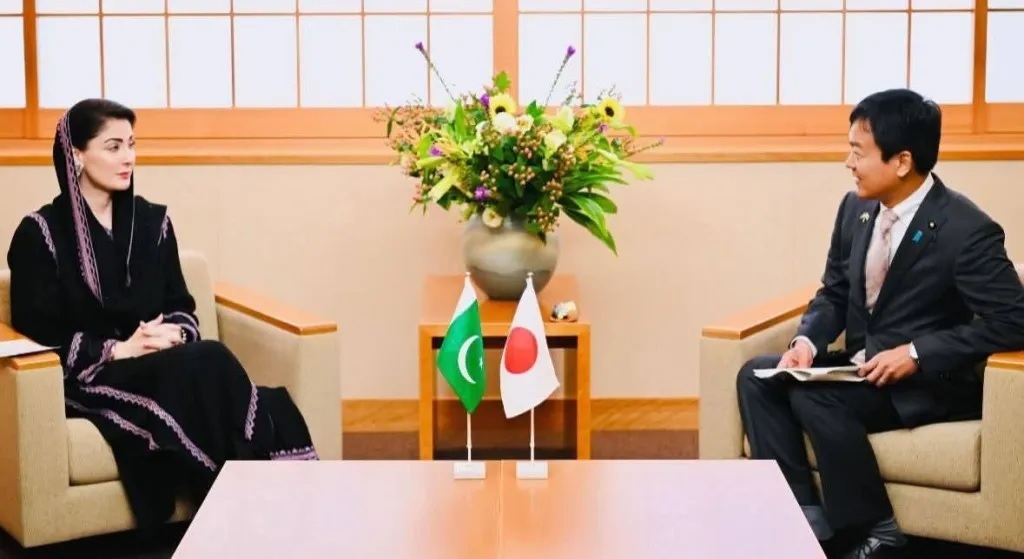
A High-Profile Visit
When Maryam Nawaz Sharif, chief minister of Pakistan’s Punjab province and daughter of former prime minister Nawaz Sharif, traveled to Japan this month, the trip quickly became the subject of animated debate back home.
Supporters hailed it as a diplomatic foray that could attract investment and modern urban planning expertise. Critics saw a costly photo-op, heavily publicized through government-paid advertisements, in a country where economic struggles run deep.
What the Punjab Government Promised
According to the provincial government, Maryam’s meetings in Tokyo and Yokohama focused on urban development, transport, waste management, health care and agriculture. Officials said she encouraged Japanese firms to invest in Punjab and held talks on developing a “city-to-city” partnership modeled on Yokohama.
Spotlight on the Jet
The most pointed criticism, however, was not about policy but logistics: Maryam flew to Japan on a Pakistan Air Force jet, a mode of travel usually reserved for the prime minister and military officials.
Opposition voices and social media users questioned whether the aircraft was provided as a favor. Punjab’s government spokesman, Imran Aslam, insisted the plane was chartered legally and paid for, citing security and reliability concerns.
Media, Messaging, and Money
If the trip was meant to project seriousness, its publicity strategy invited ridicule. Instead of relying on press releases, the Punjab government purchased prominent ads in newspapers and on television detailing Maryam’s daily schedule.
One broadcast journalist told the BBC that a single minute of ad time on a major channel can cost about 300,000 rupees (over $1,000).
“This style of advertising turns into self-promotion,” said analyst Asma Shirazi, noting that opposition parties are likely to seize on it. “When you say the country needs foreign investment, yet spend heavily on ads and private jets, it sends the wrong signal abroad.”
Why Other Provinces Don’t Do the Same
The controversy also revived an old debate: why do Punjab’s leaders embark on such high-profile overseas tours while chief ministers from Sindh, Khyber Pakhtunkhwa or Balochistan rarely do?
Political analyst Salman Ghani argued that Maryam’s family ties explain much: her uncle, Shehbaz Sharif, is prime minister, and the foreign minister, Ishaq Dar, is also a close relative.
“This gives her access and ease that other provincial leaders simply do not have,” Ghani said. “Her eyes are not only on Punjab, but also on the center.”
The Larger Question
Maryam’s allies defend the spending as an investment in the future. Punjab information minister Azma Bukhari said on X (formerly Twitter) that if pursuing foreign partnerships and advanced infrastructure is “a mistake,” the government will gladly repeat it.
Skeptics remain unconvinced. “Legally, she can use such resources,” said Shirazi. “But politically, critics are right to ask: in a country under financial stress, what message does a chief minister send by flying in military jets and traveling with large entourages?”
For now, Punjab’s government insists the Japan trip will pay dividends. But the real test, as analysts note, will be whether promises of foreign investment materialize — or whether the visit becomes another case study in the politics of optics.


